Decompression With or Without Fusion: How Spine Surgeons Decide
The short answer
Spinal decompression surgery is performed to relieve pressure on the spinal cord or its nerve roots, which can be caused by stenosis, herniated discs, bone spurs, or related conditions. Whether a fusion is added depends on the type of disease being treated and the technique used to address it. In other words, decompression and fusion are two separate decisions: the decompression addresses the compression, and the fusion addresses stability or anatomy. Some lumbar decompressions, such as lumbar interbody fusion techniques, may indirectly decompress the spine, and some cervical decompressions, such as anterior cervical discectomy and fusion, are built around the anatomy of that part of the spine.[source]
So the honest answer to "decompression with or without fusion?" is that it is not a single standard operation. It is a family of procedures, and the fusion question is answered case by case based on what is causing the compression and what the spine needs to remain stable. This article explains the factors surgeons weigh and what the difference can mean for recovery. It cannot tell you which option is right for you; that requires an evaluation of your own imaging, symptoms, and health history.
What the evidence supports
Decompression techniques vary according to which tissues are causing the compression. A laminectomy removes the lamina, the bony roof over the spinal canal, and decompresses both sides of the canal. A laminotomy removes only a small portion of the lamina to decompress one side while leaving most of the lamina intact. A laminoplasty reshapes part of the lamina. A microdiscectomy, also called spinal microdecompression surgery, removes portions of a herniated disc that is pressing on a spinal nerve, often in the lower back for people with sciatica.[source]
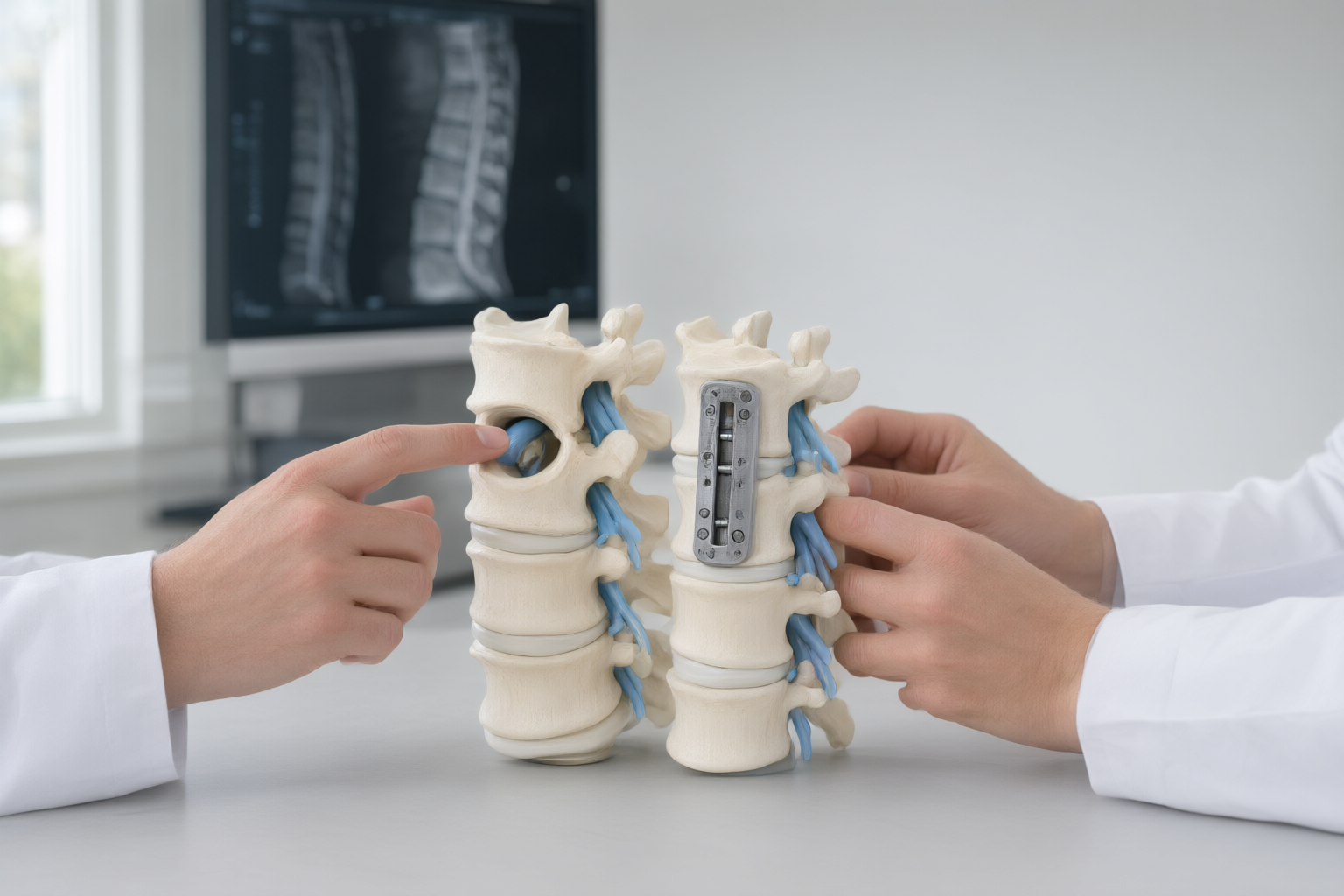
Fusion enters the picture when the decompression alone may not be enough to address the underlying problem. The source material describes this as depending on spinal stability and anatomy, and notes that many spinal fusion surgeries involve a decompression, such as a laminectomy or discectomy, as a first step before fusing two or more vertebrae together. That framing is useful: fusion is usually an addition to decompression, not a replacement for it.[source]
Decompression surgery can be a reasonable option for people who have back or neck pain or nerve-related symptoms due to compression caused by a herniated disc, spinal stenosis, or spondylolisthesis, and for whom nonsurgical methods such as physical therapy, epidural steroid injections, or pain management regimens have not provided relief. That is a general description of who may be considered, not a personal recommendation.[source]
Practical considerations
The clearest practical difference between decompression alone and decompression with fusion is recovery. The recovery time for decompression surgery alone is generally faster than for procedures that include a fusion. Patients having a laminectomy can expect surgery pain to ease within about two to four weeks and to start physical therapy and other activities by about six weeks. Fusion recovery is more variable and prolonged, often approaching three to six months before returning to exercise or sports. Hospital stay also differs: many people having a laminectomy, discectomy, or microdiscectomy go home the same day, while some patients who need a fusion stay overnight and return home one or two days after surgery. Return to work is generally two to four weeks after decompression, and some microdiscectomy patients return in under two weeks. These are typical ranges, not promises, and your surgeon's plan for your specific procedure and spinal levels is what matters.[source]
Because the fusion decision is individualized, the most useful preparation is to ask your surgeon directly which factors apply to you. A 2025 narrative review describes shared decision-making in spinal surgery as a collaborative process that integrates the available evidence, clinician expertise, and the patient's values and preferences into informed consent. It emphasizes communication about expectations, alternatives, risks, and benefits. That supports a practical approach: ask what specifically in your imaging or symptoms would make a fusion necessary, and what the trade-offs would be if it were added.[source]
| Consideration | Decompression alone | Decompression with fusion |
|---|---|---|
| Hospital stay | Often same day for laminectomy, discectomy, or microdiscectomy | Often overnight, home in one or two days |
| Return to work | Generally two to four weeks; under two weeks for some microdiscectomy patients | More variable; discuss with your surgeon |
| Return to exercise or sports | Physical therapy often around six weeks after laminectomy | Often three to six months |
| Why it may be chosen | Compression without a stability concern the surgeon identifies | Stability or anatomy concerns identified during evaluation |
Limits and responsible use
This article is general education. It cannot determine whether you need decompression, whether a fusion should be added, or what your recovery will look like. Success rates for decompression are difficult to calculate precisely because procedures, conditions, and patients vary widely, and outcomes are often measured with patient-reported questionnaires that are useful but subjective. Some symptoms, such as rapid onset of certain neurological changes, require prompt medical evaluation rather than an online article. Use this material to prepare questions for a qualified clinician who can review your imaging and history.[source]
Next steps
For current appointment, location, or contact information, visit the official website.[source]
Frequently Asked Questions
What is the difference between decompression alone and decompression with fusion?
Decompression removes bone, disc, or soft tissue that is pressing on a nerve or the spinal cord. A fusion is an additional procedure that joins vertebrae, and it is added when the surgeon judges that stability or anatomy calls for it. Many fusion surgeries include a decompression as a first step.
What makes a fusion necessary alongside decompression?
Patient education sources describe the decision as depending on the type of disease being treated, spinal stability, and anatomy. There is no single rule that applies to everyone, so the specific reason should be explained for your case.
How does recovery differ?
Recovery after decompression alone is generally faster. Many decompression patients go home the same day and return to work in about two to four weeks, while fusion recovery is more variable and can take three to six months before returning to exercise or sports.
When is decompression surgery considered?
It may be considered for people with nerve compression symptoms from conditions such as a herniated disc, spinal stenosis, or spondylolisthesis when nonsurgical options like physical therapy, injections, or pain management have not provided relief. A clinician evaluates whether it fits an individual patient.
References
- Shared decision-making and informed consent in spinal surgery: 2025 narrative review — pubmed.ncbi.nlm.nih.gov
- Spinal Decompression: Surgery for Neck & Back Problems | HSS — www.hss.edu
- Official website — spineurosurgery.com